Closes#37670.
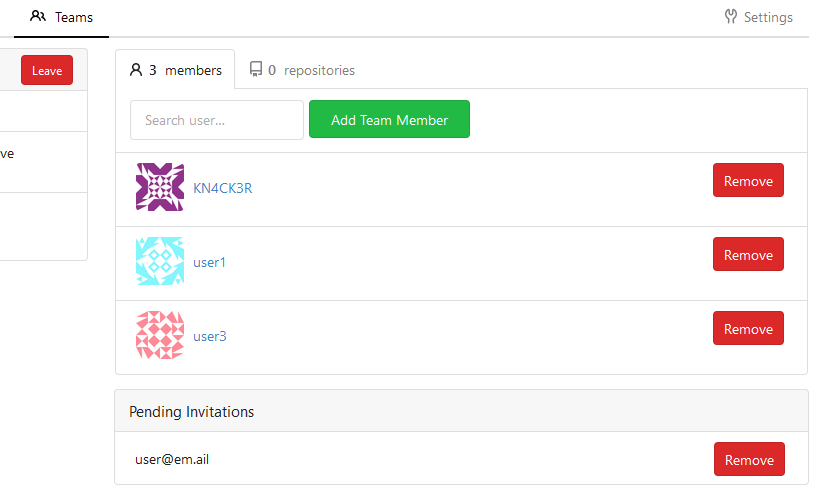
Today, org members in Gitea only see teams they're a member of. In
larger orgs that hurts onboarding and discoverability — there's no way
to look up which team owns what without asking around. GitHub solves
this with a per-team visibility setting; this PR brings the same model
to Gitea.
## What changes
- Every team gets a `visibility` setting:
- `private` *(default)* — only team members and org owners can see the
team. Same as today's behavior.
- `limited` — listable by any member of the organization. Members and
the repos the team has access to are visible too. Non-org-members still
see nothing.
- `public` — listable by any signed-in user.
- The Owners team visibility is fixed and cannot be changed via
settings.
- Existing teams default to `private`, so this is a no-op for anyone who
doesn't change anything.
## API
- `Team`, `CreateTeamOption`, `EditTeamOption` all gain a `visibility`
field (string enum: `private` | `limited` | `public`).
- `GET /orgs/{org}/teams` and `/orgs/{org}/teams/search` now apply the
same visibility rules as the web UI:
- site admins and org owners still see every team
- other org members see their own teams plus any `limited` or `public`
team
- `private` teams are no longer leaked through these endpoints
- Swagger/OpenAPI specs regenerated.
## UI
View from admin2 (not an owner):
<img width="1669" height="726"
src="https://github.com/user-attachments/assets/daf4bccb-644b-4426-b178-71963aeaf73b"
/>
View from admin (owner):
<img width="2559" height="863"
src="https://github.com/user-attachments/assets/4f22cebc-e9df-4fd2-8ed4-724d31fadb7a"
/>
---------
Signed-off-by: bircni <bircni@icloud.com>
Co-authored-by: TheFox0x7 <thefox0x7@gmail.com>
Co-authored-by: wxiaoguang <wxiaoguang@gmail.com>
In history (from some legacy frameworks), both `:name` and `name` are
supported as path path name, `:name` is an alias to `name`.

To make code consistent, now we should only use `name` but not `:name`.

Also added panic check in related functions to make sure the name won't
be abused in case some downstreams still use them.
`RepoTransfer` now is at models, but if we want to move it into `repo`
model, it will depend on `Team`. So this PR also makes repo model depend
on org model to make it possible. Just refactor, no code change.

- [x] Move `DeleteOrganization` from `models/organization` to service
layer
- [x] Move `AccessibleTeamReposEnv` to `models/repo`
- [x] Move `RepoTransfer` from `models` to `models/repo`
- [x] Merge `getUserTeamIDs` and `GetUserTeamIDs`, Merge `GetUserTeams`
and `getUserTeams`.
- [x] Remove `Team`'s `Repos []*repo_model.Repository` to avoid dependency recycle.
There are still some functions under `models` after last big refactor
about `models`. This change will move all team related functions to
service layer with no code change.
This PR only does "renaming":

* `Route` should be `Router` (and chi router is also called "router")
* `Params` should be `PathParam` (to distingush it from URL query param, and to match `FormString`)
* Use lower case for private functions to avoid exposing or abusing
Since `modules/context` has to depend on `models` and many other
packages, it should be moved from `modules/context` to
`services/context` according to design principles. There is no logic
code change on this PR, only move packages.

- Move `code.gitea.io/gitea/modules/context` to
`code.gitea.io/gitea/services/context`
- Move `code.gitea.io/gitea/modules/contexttest` to
`code.gitea.io/gitea/services/contexttest` because of depending on
context
- Move `code.gitea.io/gitea/modules/upload` to
`code.gitea.io/gitea/services/context/upload` because of depending on
context
Part of #27065

This reduces the usage of `db.DefaultContext`. I think I've got enough
files for the first PR. When this is merged, I will continue working on
this.

Considering how many files this PR affect, I hope it won't take to long
to merge, so I don't end up in the merge conflict hell.

---------

Co-authored-by: wxiaoguang <wxiaoguang@gmail.com>
The JSONRedirect/JSONOK/JSONError functions were put into "Base" context
incorrectly, it would cause abuse.

Actually, they are for "web context" only, so, move them to the correct
place.

And by the way, use them to simplify old code: +75 -196
## Changes
- Fixes the case where a logged in user can accept an email invitation
even if their email address does not match the address in the invitation
If the user only belongs to one org team and the org is private,
leaving the org team will redirect to `ctx.Org.OrgLink + "/teams/"`
which is inaccessible.

So we need to check whether the user still belongs to the org.
To avoid duplicated load of the same data in an HTTP request, we can set
a context cache to do that. i.e. Some pages may load a user from a
database with the same id in different areas on the same page. But the
code is hidden in two different deep logic. How should we share the
user? As a result of this PR, now if both entry functions accept
`context.Context` as the first parameter and we just need to refactor
`GetUserByID` to reuse the user from the context cache. Then it will not
be loaded twice on an HTTP request.

But of course, sometimes we would like to reload an object from the
database, that's why `RemoveContextData` is also exposed.

The core context cache is here. It defines a new context
```go
type cacheContext struct {
	ctx  context.Context
	data map[any]map[any]any
        lock sync.RWMutex
}

var cacheContextKey = struct{}{}

func WithCacheContext(ctx context.Context) context.Context {
	return context.WithValue(ctx, cacheContextKey, &cacheContext{
		ctx:  ctx,
		data: make(map[any]map[any]any),
	})
}
```

Then you can use the below 4 methods to read/write/del the data within
the same context.

```go
func GetContextData(ctx context.Context, tp, key any) any
func SetContextData(ctx context.Context, tp, key, value any)
func RemoveContextData(ctx context.Context, tp, key any)
func GetWithContextCache[T any](ctx context.Context, cacheGroupKey string, cacheTargetID any, f func() (T, error)) (T, error)
```

Then let's take a look at how `system.GetString` implement it.

```go
func GetSetting(ctx context.Context, key string) (string, error) {
	return cache.GetWithContextCache(ctx, contextCacheKey, key, func() (string, error) {
		return cache.GetString(genSettingCacheKey(key), func() (string, error) {
			res, err := GetSettingNoCache(ctx, key)
			if err != nil {
				return "", err
			}
			return res.SettingValue, nil
		})
	})
}
```

First, it will check if context data include the setting object with the
key. If not, it will query from the global cache which may be memory or
a Redis cache. If not, it will get the object from the database. In the
end, if the object gets from the global cache or database, it will be
set into the context cache.

An object stored in the context cache will only be destroyed after the
context disappeared.
Change all license headers to comply with REUSE specification.
Fix#16132
Co-authored-by: flynnnnnnnnnn <flynnnnnnnnnn@github>
Co-authored-by: John Olheiser <john.olheiser@gmail.com>
- Currently the function takes in the `UserID` option, but isn't being
used within the SQL query. This patch fixes that by checking that only
teams are being returned that the user belongs to.
Fix#20829
Co-authored-by: delvh <dev.lh@web.de>
Reusing `/api/v1` from Gitea UI Pages have pros and cons.
Pros:
1) Less code copy

Cons:
1) API/v1 have to support shared session with page requests.
2) You need to consider for each other when you want to change something about api/v1 or page.

This PR moves all dependencies to API/v1 from UI Pages.

Partially replace #16052
 bircni
 Lunny Xiao
 wxiaoguang
 PineBale
 Exploding Dragon
 Chai-Shi
 a1012112796
 KN4CK3R
 853
853
 JakobDev
 Nanguan Lin
 yp05327
 silverwind
 Jack Hay
 Jakob
Jakob
 flynnnnnnnnnn
 6543
6543
 Gusted